
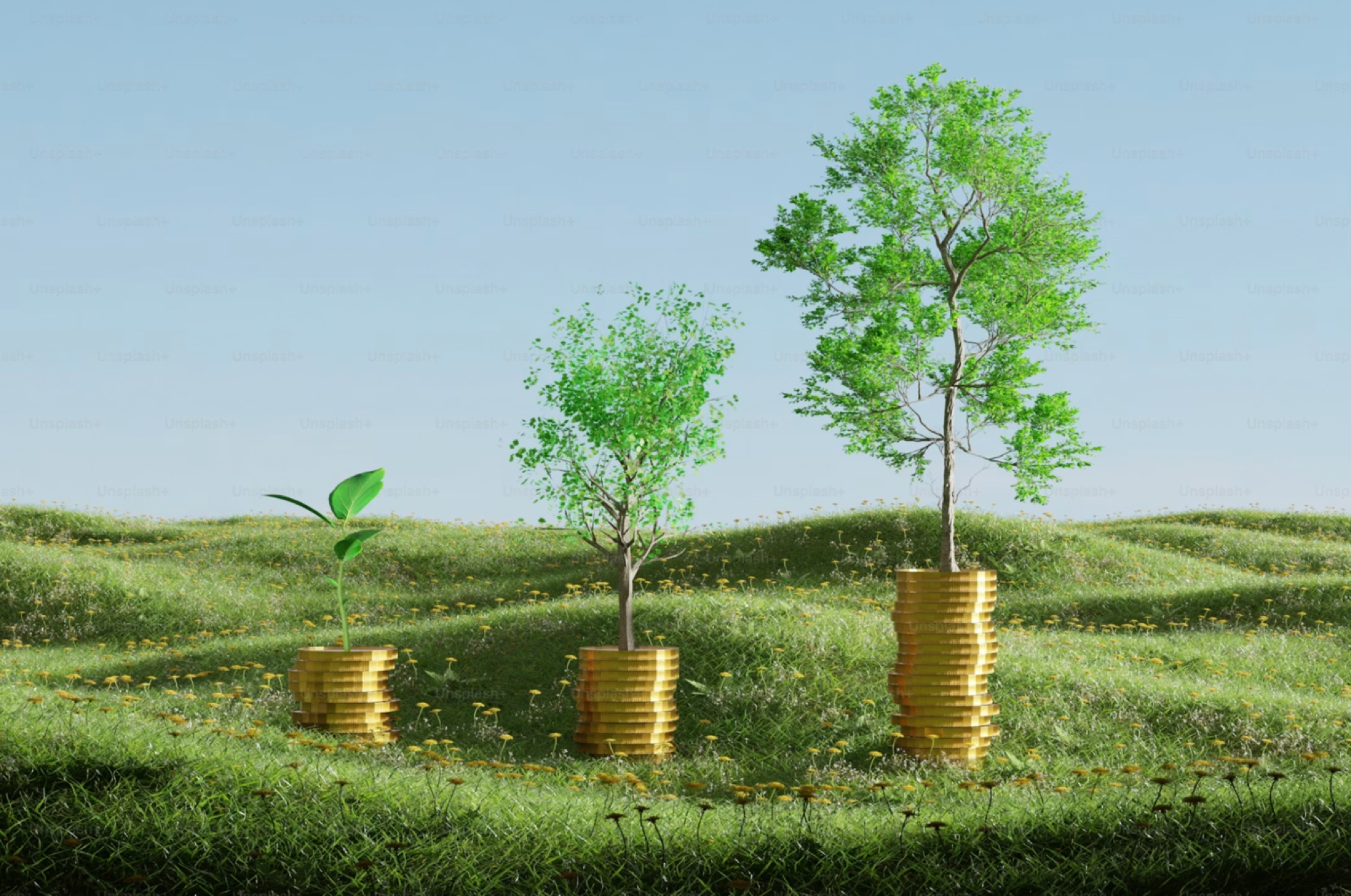
A forest that stays alive is carbon that stays in the trees instead of being released into the atmosphere. A forest that is replanted is carbon removed from the atmosphere and sequestered in the trees. The idea behind a forest carbon project can be expressed in a single sentence:
Paying those who protect and restore a forest, by turning the stored CO₂ into “credits” that a company can buy.
But between the intention and the first credit sold lies a real uphill battle. That is what we will look at step by step in this article.
Defining a project: protect, or restore
The first question to ask is simple: does the forest already exist, or does it need to be created (or recreated)?
We distinguish two broad families of projects:
- REDD+ projects: These consist of avoiding the deforestation and degradation of existing forests.
- ARR projects (Afforestation, Reforestation, Revegetation): These consist of creating new forests or restoring degraded land by planting trees and implementing soil conservation practices.
At this stage we are not yet talking about carbon; we mainly check the technical side. Who owns the land? Who uses it? Where exactly are the project’s boundaries? These steps are far from trivial; for example, an unclear land-tenure situation can sink a project years later.
Does the project hold up? The feasibility study
Before launching the project and spending a single dollar on design, the idea has to be tested. This is a key step; this is the moment when the project’s viability is validated on the ground, even if on paper it already looks perfect.
In practice, we start by drafting a Project Identification Note (PIN). It is a summary that sets out the objectives, the location, a first estimate of the baseline scenario, and an estimate of the carbon benefits. This document serves to convince the government, funders, and investors to take an interest in the project.
The Project Identification Note does not guarantee the project’s feasibility, which is why it is then followed by an in-depth, more serious feasibility study. This study makes it possible to take a critical look at the project and decide whether carbon finance is really a viable option. There are four classic pitfalls to avoid in this study: overestimating the size of the project, underestimating the costs, being too optimistic about carbon revenues, and poorly defining the scope of the project.
There is also a fundamental obstacle to take into account. A project generates no credits during the first years, and therefore no revenue. Yet the design phase alone already costs between 150,000 and 300,000 dollars. This development must therefore be financed up front, from equity, through funders, or through investors who buy the future credits forward. A way has to be found to finance the project while waiting for profitability, otherwise it will never get off the ground.
The baseline scenario, additionality, and leakage
Here we reach the most important step, and the one that must be handled with great rigour. To know how much CO₂ a project avoids or removes, it has to be compared with what would have happened without it. This is the baseline scenario, that is, the difference between “without project” and “with project” that gives the right to credits.
Three concepts drive everything here:
- The Baseline, established through historical and spatial modelling. It lets us see what would have happened without the project.
- Additionality, proving that the emission reductions are real, measurable, and would not have come about without the financing from carbon credits.
- Leakage, if you protect a plot but the loggers simply go and cut the forest next door, you have avoided nothing; you have merely shifted the problem. Leakage must therefore be measurable and deductible.
It is at this step that some projects have lost credibility. Some projects had been set up in areas with a low real risk of deforestation, or had inflated their Baseline to generate more credits than they deserved.
Choosing a methodology and a standard – Getting the project certified
You cannot just calculate carbon on your own and claim your credits. To generate credits you have to rely on a certification standard, the best known being Verra (VCS) or Gold Standard, and on a methodology validated by that standard. The methodology sets a precise framework for how to quantify emission reductions.
Everything is then recorded in a central document, the PDD (Project Design Document), which brings together the objective, the location, the duration, and the method of the project. It is the reference file on which everything else will rely.
Getting the file validated by an independent third party
We saw that a methodology had to be followed, and it is now that the correct application of the method gets checked.
Before a single credit exists, the PDD passes through the hands of an independent auditor (called a VVB). Its role is to verify that the method is properly applied and that the promises hold up. These auditors must themselves be accredited by the standard. In some countries, the host government must also give the project the green light.
Implementing the project
Once the file is validated, the project can be deployed on the ground. The project becomes concrete: we plant, we protect, we set up activities that reduce the pressure on the forest. All of this is steered by a project proponent, the organisation (NGO, company, cooperative, etc.) that coordinates the project over time and bears responsibility for it.
But you must not forget to take people into account in the implementation. It has to be decided very early how the credit revenues will be shared between the project proponent, the landowners, and the communities that live in the forest concerned. And above all, these communities must give their agreement freely, in advance, and with full information, this is the principle of FPIC consent. When this human dimension is poorly handled, the project loses its legitimacy and may even lose its certification.
Measuring the carbon, MRV
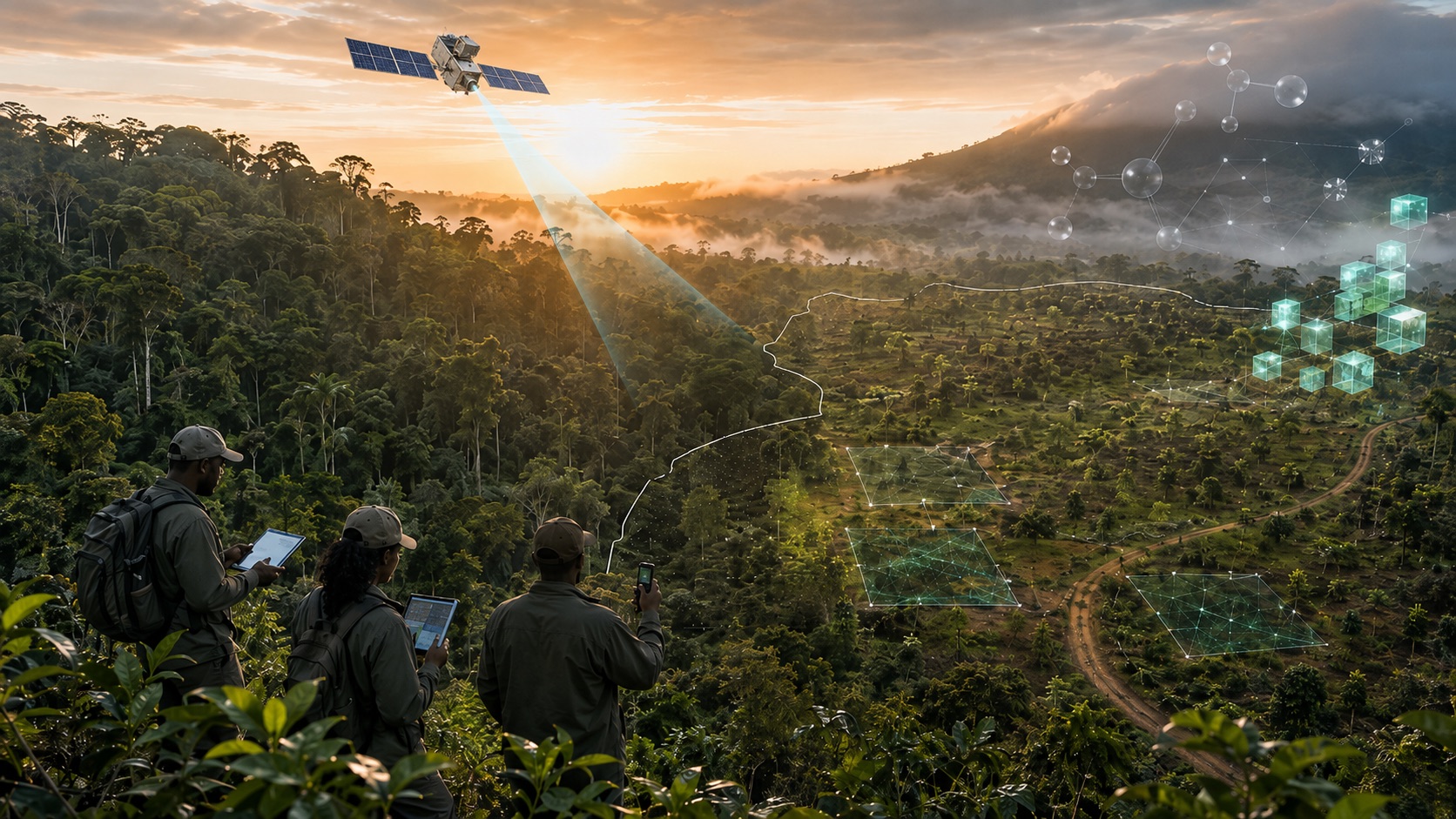
Obtaining the credits relies heavily on this part. MRV is the system that actually estimates the forest’s biomass and carbon stocks, then tracks how they change over time.
In practice, to measure carbon we measure the diameter and height of the trees on a sample plot, then convert them into biomass using allometric equations. Living biomass accounts for more than three quarters of a forest’s carbon. To cover large areas, these field measurements are supplemented with remote sensors to reconstruct the canopy tree by tree. The problem is that precision remains fragile, particularly in tropical Africa, where few allometric equations have been established and where there is not yet a consensus on biomass mapping.
In fact, what a project most often lacks is a reliable MRV. Many rely on partial or outdated measurements. This is precisely where players like TerraKora come in. By combining satellite, Lidar, and AI, they add an independent layer of precise and reliable forest biomass measurement. The tonnes of CO₂ a project claims have to be measured and verifiable rather than simply asserted. In a market where trust has collapsed, it is this independence of the measurement that gives a credit its value and credibility.
Verify, then issue the credits
Measurement alone is not enough. It has to be verified, again by an independent auditor. It is only once this verification is validated that the standard’s registry officially records the credits. One credit = one tonne of CO₂ avoided or sequestered.
These credits are called “ex-post”; they are only issued after verification, for carbon already stored or avoided.
This measure-then-verify process takes place throughout the project; every one to five years we remeasure, have it verified again, and new credits are issued.
Selling the credits: to whom, and on which market?
Once issued, the carbon credits head to different types of market.
The voluntary market is the main outlet for forest credits: companies finance climate projects there without being obliged to. Credits trade there between €3 and €50 per tonne, a price spread that reflects the differences in quality between credits.
The compliance market, which brings together players legally required to offset their emissions. Careful though, they do not accept every forest carbon credit; the biggest systems, such as the European EU ETS, work with allowances. The real outlet for forestry on the compliance market is CORSIA. It accepts certain forest credits, provided they are authorised by the country of origin.
Finally, credits can be traded between States. Article 6.2 of the Paris Agreement frames the transfer of credits (ITMOs). In this kind of exchange, to avoid double counting, the selling country makes a corresponding adjustment.
Permanence, over the long term
One last point that is often forgotten: the stored carbon can be released again. There are indeed risks of fire, deforestation, or drought hanging over any forest project. This is what is called the risk of “non-permanence”. To guard against it, standards require part of the credits to be set aside in reserve, as Buffers, and keep monitoring the forest for decades.
Conclusion
Setting up a forest carbon project is a long and rigorous process. To ensure the generation of carbon credits, and therefore the remuneration, there are four things you absolutely need:
- An impeccable foundation: A credible Baseline with no overestimation
- A modern, reliable measurement system (MRV): the combination of fieldwork and cutting-edge technologies (LIDAR, AI) to prove the real storage of carbon
- A strong human anchoring: respect for the consent of local populations and a sharing of the revenues
- A long-term vision: Managing non-permanence risks to guarantee the project’s viability over several decades.
Today the carbon market rewards integrity. Investing in rigour from the earliest stages of the process is the best way to create high-value carbon credits, beneficial for the climate, biodiversity, and local populations alike.